
Interview with Sharon Waller, Secretary, Illinois Section - WateReuse Association
In this exclusive interview, Sharon Waller, Secretary, Illinois Section for WateReuse Association, challenges the widespread assumption that the Midwest is inherently water‑abundant. She offers a nuanced, region‑specific view of water availability, regulatory limitations, and infrastructure risks that are often overlooked during early data center planning. Drawing on municipal and utility‑side experience, Sharon explains why once‑through drinking water cooling remains the default—and why it represents a missed opportunity for efficiency, reuse, and public trust. The discussion highlights the critical role of early municipal engagement, on‑site water reuse, and public‑private partnerships in enabling sustainable, scalable data center development across the Midwest.

The Midwest is often seen as water-abundant. How accurate is that perception when you look at specific states and subregions, and where do developers tend to make incorrect assumptions early in planning?
Water abundance only stretches a few miles from the shores of the Great Lakes. In Illinois, municipal water distribution lines extending from westshore water producers to serve the areas of depleting 1 2026 Advancing Data Center Construction Midwest - water for power efficiency & sustainability 2 groundwater. Outside the Great Lakes Basin in Indiana, surface water is generally characterized by relatively low-flowing rivers and a few lakes and reservoirs (Purdue, n.d. Indiana lake/reservoir snapshot).
Illinois is the only state with a diversion allocation (2.1 BGD limited by 1967 Supreme Court Decree) allowed in the Great Lakes Compact, and Illinois is the only state that has a prohibition of water reuse in our source water code (35 IAC 611.231) which the newly formed Illinois Section of the WateResue Association is working to change. Current use of the Illinois allocation is about 150 cfs surplus per Water Year (Lewis et al., 2024). Data centers seeking to Lake Michigan water for cooling are more likely to make a deal to access a portion of an already assigned allocation, such as City of Joliet’s recent deal with City of Chicago (IDNR, 2024). Alternative water sources such as municipally treated reclaimed water can be used for cooling water and other industrial applications.
Bringing data centers on-line ASAP is taking precedence over water and power efficiency. During the power peaker plant boom around 2000, new power generation stations were largely sited on rivers of significant flow (relatively high flow at low flow conditions during the summer, 7Q10) to avoid municipal water costs. By comparison, 97% of new data centers are cooled with once-through municipal drinking water at startup (Volzer, 2025), and water efficiency upgrades are considered afterwards.
Water consumption can be reduced by 80% with on-site reuse. On-site water reuse treatment systems can reduce cooling water consumption by 80%, but these systems are designed based on water quality requirements during the planning stage. Some data centers that are being built in phased construction are bringing Phase I with drinking water cooling and then considering water reuse for subsequent phases.
What does effective early engagement with municipalities actually look like when it comes to water infrastructure?
Early engagement is key to improved water and power efficiency. There is a water-energy nexus (ISAWWA, 2010) that can be achieved with planning. Municipal utilities have been caught off-guard by the speed of data center development. By the time municipal utilities figure out better questions to ask, the developer has already broken ground with a higher energy air-cooled system.
Overbuilding is a significant risk to utilities. Seasonal demand such as industrial cooling applications (and irrigation) can result in oversized drinking water distribution systems where chlorine residual is hard to maintain. Equalization (cooling ponds), closed-loop recycling, and reuse can be applied to save water and money and reduce risk of overbuilding.
Total dissolved solids (TDS) is the critical water quality parameter for closed-loop cooling and will determine the number of cycles of concentration before a portion of the water is replaced (i.e., blown-down and makeup water). Wasted water can be discharged (to NPDES discharge or sewer) or treatment to reduce TDS and sent back to the cooling loop. Since TDS removal required the highest level of advanced treatment (e.g. reverse osmosis or distillation) and treated wastewater effluent is often better quality than river water quality, the source of water used to fill the cooling system (drinking water, river, or treated wastewater effluent) is less important than maintaining low enough TDS to manage corrosion.
What municipalities and utilities can do:
- Utilities should maintain a prospectus of water and power transmission availability along with other key infrastructure such as sewer capacity at each water treatment plant and water reclamation plant.
- Two forms of water reuse should be evaluated: 1) sources water for initial fill and make-up which may or may not require additional treatment depending on the number of cycles of concentration, and 2) on site treatment of make-up water to return it to closed-loop cooling.
- On-site treatment systems can be operated privately or by the local utility as distributed systems via a public-private partnership.
- Utility-provided technical assistance for on-site system operation may be welcomed by private developers.
- Municipalities should consider supporting legislation that promotes public-private partnerships for infrastructure improvements such as a tax credit for water reuse (HR2940).
What data center developers can do:
Data center developers should be prepared to cover the cost of infrastructure improvements and lead with a strong public communications community benefits.
For instance, the planned Amazon Web Services double data center development in Hobart Indiana is paying for all needed infrastructure improvements, returning unused TIF money to pay for residential garbage collection, and working with Ivy Tech and local high schools to develop job training curriculum to build a pool of local applicants for new jobs at the data centers.
Equinix is recovering heat from data center for residential heating (Bloomberg, 2025)
To what extent are power efficiency gains from water-assisted cooling offset by increasing scrutiny on water use from communities and regulators?
Early public communication and engagement is key to working with community and regulators. Involving municipalities and on-site water reuse designers as early as possible in the planning phase will ease public acceptance. States Chapters of the WateReuse Association (Illinois, Ohio, and Kansas) can work with regulators to identify a clear permitting pathway for reuse at data centers.
Do you see water becoming a primary limiting factor for data center growth in certain Midwest markets over the next 5–10 years?
No. Most data centers are using once-through drinking water cooling systems which is the least water-efficient cooling process, and we haven’t even started to reuse water. Decision tools for the AI and data center industry exist (UAZ, 2026; BNL, 2021) and more are in development that evaluate the power-water nexus for on-site reuse and reclaimed water applied to various cooling technologies (WRF 5367). Power will more likely limit data center growth, and power generation also requires cooling.
What are you personally looking forward to learning from other sessions and speakers at Advancing Data Center Construction West 2026?
- Why don’t we have industrial corridors with super-sized infrastructure and TIF districts to attract new industry?
- Why are data centers not being built near water reclamation plants (WRP)?
- If electric transmission is insufficient, why aren’t municipalities working with electric providers to improve transmission near WRPs?
- Why aren’t municipalities supporting public-private partnerships for infrastructure improvements such as a tax credit for water reuse (HR2940)?
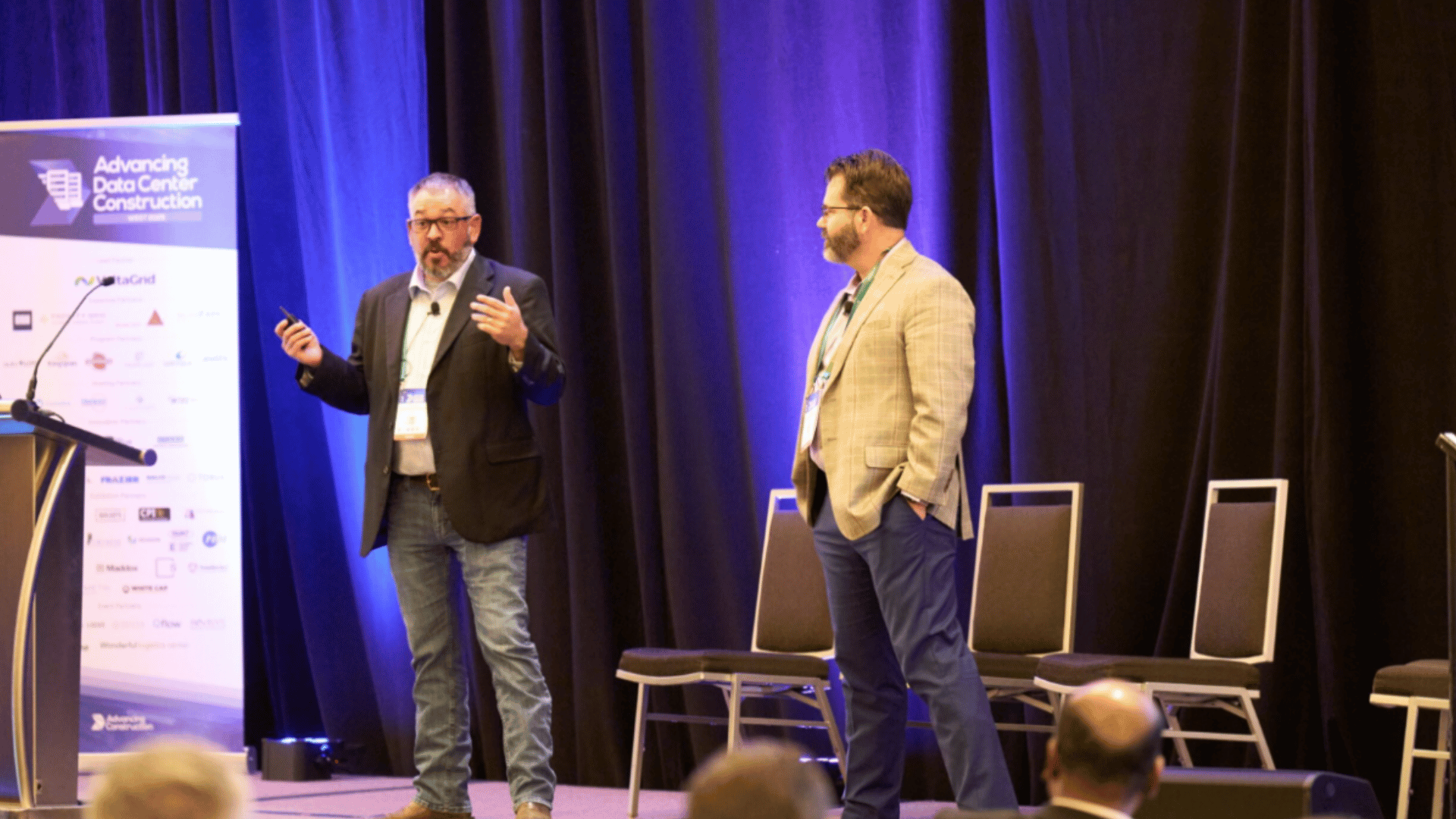
Explore the Agenda
See how leading project teams are adapting delivery strategies to keep pace with AI-driven demand, power limitations, and workforce constraints shaping data center construction across the Midwest.
Partner With Us
Position your brand at the center of Midwest data center construction and connect directly with the firms delivering the region’s largest projects.
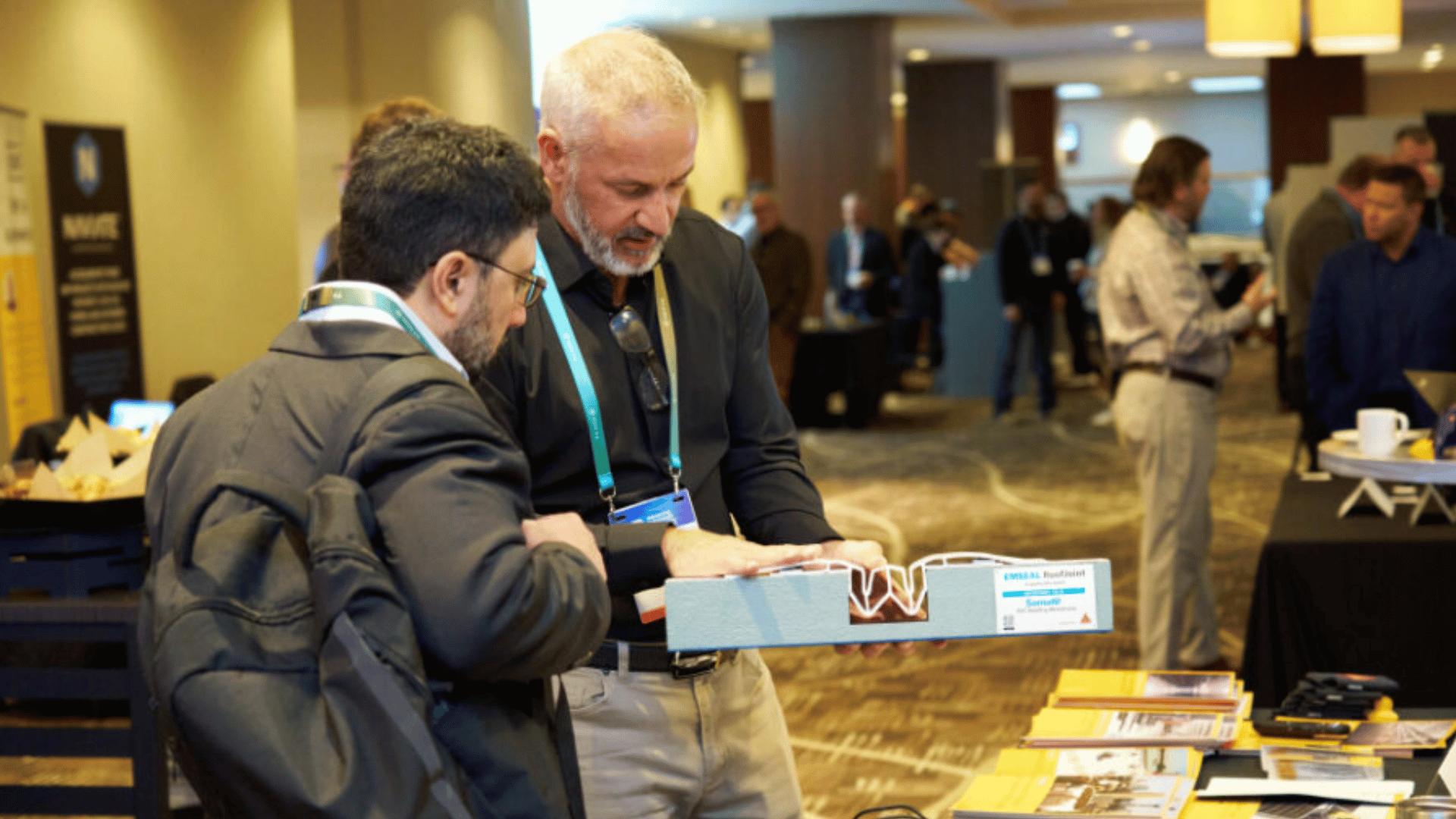
Join Industry Leaders
Build relationships with the hyperscalers, colocators, developers, contractors and trade partners shaping the next wave of AI-ready infrastructure.