
Interview with Yury Lui, Energy & Environment Strategist & Facilitator – Digital Realty
In this exclusive interview, Yury Lui, Energy & Environment Strategist at Digital Realty, offers a candid and timely perspective on the evolving challenges shaping data center development across the Midwest. Drawing on real-world project experience, Yury explores why community opposition has become more sophisticated, shifting from single-issue concerns to systems-level scrutiny around power, water, health, and land use. He highlights gaps in early-stage engagement, the need for greater transparency around infrastructure tradeoffs, and how state-level differences demand localized strategies. The discussion also looks ahead to the role Advancing Data Center Construction Midwest 2026 can play in bridging disconnects between hyperscalers, developers, authorities, and communities.

Over the past 12–18 months, communities have become far more informed, organized, and proactive. It’s no longer just “data centers use too much power.” Stakeholders are now asking detailed, technically informed questions about grid strain, interconnection queues, and whether large-scale load growth could translate into higher electricity rates or deferred infrastructure investments. This aligns with broader trends where community opposition is now actively influencing project timelines and even halting developments altogether.
What’s notably changed and reinforced by recent research is the elevation of health and environmental externalities into the core of community concerns. Communities are increasingly linking data center operations to potential air pollution from backup generation, water-related impacts, and noise exposure, all of which are now being discussed through a public health lens rather than solely in terms of environmental compliance. This represents a step-change in how opposition is framed: from sustainability to human impact.
Water usage, in particular, has become a visible and often emotional flashpoint. Even in regions that are not traditionally water-stressed, communities are questioning the long-term sustainability of evaporative cooling, its potential impacts on municipal systems, and its resilience to climate variability. This reflects a growing awareness of the water-energy nexus, where decisions around power infrastructure and cooling technologies are increasingly understood as interconnected and constrained by broader climate dynamics.
In parallel, concerns around land use and ecosystem disruption are gaining traction. Communities are evaluating whether large-scale data center developments align with local priorities, especially given trade-offs such as reduced land availability for other economic uses and impacts on natural systems and community well-being.
Overall, the shift we’re seeing is from single-issue opposition to systems-level scrutiny. Communities are no longer evaluating data centers in isolation; they are assessing cumulative impacts across energy, water, environment, health, and economics. As this evolves, we need to shift how we engage: from compliance-driven messaging to integrated, transparent discussions that address the full lifecycle and cross-sector implications of data center development.
What’s one criticism from communities that you believe is actually valid—and not being addressed well enough?
A valid but underemphasized criticism is the lack of early, transparent engagement on key infrastructure decisions and the absence of clear, standardized disclosure of local impacts and trade-offs.
Too often, by the time a project is introduced publicly, the most consequential decisions, site selection, power strategy, cooling approach, and water sourcing, are already largely fixed. At that point, engagement becomes reactive and informational rather than participatory. Communities are right to push back on this because they are being asked to accept outcomes they had no opportunity to influence.
What’s changed is that communities are now far more informed and are asking the same types of questions that more mature industries, like oil and gas, have had to answer for years:
- What are the cumulative impacts, not just from this facility, but from regional clustering?
- What are the real tradeoffs between water use, energy efficiency, and long-term sustainability?
- How does this project affect local infrastructure, utility costs, and quality of life over time?
These are valid questions, but the industry still lacks consistent, location-specific frameworks to answer them clearly. Unlike oil and gas, where standardized metrics and disclosure practices have evolved over decades, data centers often rely on fragmented or portfolio-level reporting that doesn’t translate well to local community concerns.
There’s also a gap in how we communicate tradeoffs, not just outcomes. For example, choosing between air-cooled and evaporative systems is not simply a technical decision; it reflects a balance between water consumption, energy efficiency, and grid impact. Without transparently explaining those trade-offs early on, communities tend to assume the worst-case scenario.
Ultimately, the issue is not just communication; it’s timing and credibility. Communities want to be engaged before decisions are locked in, and they expect a level of transparency and accountability that matches the scale of infrastructure being deployed. Until the industry shifts from late-stage disclosure to early-stage, data-driven dialogue, supported by standardized metrics and a clear articulation of tradeoffs, this criticism will remain both valid and a primary driver of opposition.
How do state-level differences across the Midwest shape your engagement strategy at the local level?
State-level differences across the Midwest fundamentally change both the starting point and the messaging of any engagement strategy. The biggest variables are utility structure, regulatory frameworks, water governance, and incentive policies; each directly influences what local communities care about and how projects are perceived.
From a power perspective, some Midwestern states operate under vertically integrated utility models, where capacity planning and cost recovery are more centralized and predictable. In others, particularly deregulated markets, the path to securing power is more complex and often raises concerns around interconnection timelines, grid congestion, and potential rate impacts. As a result, in certain states, the focus of engagement is on grid partnerships and long-term infrastructure investment, while in others, it shifts toward cost transparency and ratepayer protection.
Water is another major differentiator. States and municipalities vary widely in how water rights, pricing, and long-term availability are managed. Even within the Midwest, some regions are beginning to scrutinize industrial water use more closely due to climate variability and competing demand. That means the same cooling strategy can be perceived very differently depending on the local context. In water-sensitive areas, engagement needs to go deeper into source sustainability, seasonal variability, and contingency planning, not just annual consumption metrics.
Incentive structures also shape the narrative. States with aggressive tax incentives and economic development programs tend to frame data centers as growth engines, but that can trigger local skepticism if the perceived community benefit doesn’t align with the scale of incentives offered. In those cases, engagement has to clearly articulate tangible local value beyond jobs, such as contributions to the tax base, infrastructure upgrades, and indirect economic impact.
Perhaps most importantly, these state-level differences influence the level of trust at the local level. In regions with a history of large-scale industrial development, communities may be more familiar with the tradeoffs and regulatory safeguards. In others, where data centers are relatively new, there is often a steeper learning curve and a greater need for foundational education on what the infrastructure is, how it operates, and its real impacts.
The key takeaway is that engagement strategies cannot be standardized across the Midwest. They must be localized, technically grounded, and aligned with state-specific realities, while still addressing broader themes such as the water-energy nexus, cumulative impacts, and long-term sustainability.
What types of conversations do you expect to have at Advancing Data Center Construction Midwest 2026 that simply don’t happen in day-to-day project delivery?
In day-to-day project delivery, conversations are constrained by execution, in terms of schedule, budget, permitting, and risk. The focus is on delivering a specific asset, not rethinking how the industry engages, communicates, or builds long-term community alignment.
At Advancing Data Center Construction Midwest 2026, the conversation shifts from project-level execution to system-level strategy and cultural change.
One key area is open communication and community integration, which rarely gets the attention it deserves during active projects. In delivery, engagement is often limited to required public meetings or responses to concerns. At the conference, we can explore more proactive and sustained models, such as:
- Establishing open house programs at existing data centers, where local residents, government officials, and stakeholders can see operations firsthand
- Creating structured site tours for high school students, not just as a PR effort, but as part of a long-term workforce development strategy
- Building ongoing relationships with local institutions, rather than engaging only during permitting cycles
These types of initiatives do two things: they demystify the infrastructure and create a tangible connection between the facility and the community. Importantly, students represent a future labor pipeline. Early exposure helps position data centers as viable, high-quality career paths, which is a narrative the industry has not fully developed.
Another area is standardization and transparency. Day-to-day teams operate within existing reporting frameworks, but at the conference, we can challenge them:
- What does meaningful, location-specific disclosure of water and energy usage look like?
- How do we communicate tradeoffs—such as water vs. energy efficiency—in a way that is technically accurate but publicly accessible?
We also expect more candid discussions around lessons learned and what hasn’t worked. Active projects don’t create space for openly sharing missteps whether it’s community pushback, misaligned expectations, or gaps in early engagement. This forum allows stakeholders to step back and address those realities directly.
Finally, the event enables cross-stakeholder alignment that rarely happens in practice. Developers, operators, utilities, local governments, and community representatives can engage in the same conversation particularly around:
- Redefining early-stage engagement as a standard practice
- Aligning infrastructure planning with community expectations
- Establishing what “good neighbor” behavior looks like beyond compliance
Ultimately, these are conversations about moving from a reactive, project-by-project engagement model to a proactive, community-integrated approach—and that’s not something day-to-day project delivery environments are designed to support.
Where do you see the biggest disconnect today between hyperscalers, colocators, developers, local authorities, and communities - and how can Advancing Data Center Construction Midwest 2026 help close that gap?
The biggest disconnect today is a fundamental misalignment between global infrastructure strategy and local value perception, compounded by differences in time horizons, transparency, and definitions of “benefit” across stakeholders.
On one side, hyperscalers are increasingly operating amid intense AI-driven demand growth, with the primary constraints being power availability, speed-to-capacity, speed-to-market, and network scalability across portfolios of sites. This is pushing development toward rural and secondary markets where land and energy capacity are more available. In many cases, hyperscalers are also willing to directly fund or co-invest in transmission upgrades, substations, and utility-scale infrastructure expansion to unlock these locations. However, that investment is often not fully understood or clearly communicated at the local level, where the infrastructure upgrades are seen as disruptive rather than enabling.
At the same time, colocation providers and developers sit in a different position in the value chain. Unlike hyperscalers, they are often deeply embedded in local markets and rely on municipalities, economic development agencies, and local utilities for permitting and acceptance. Their challenge is not only technical execution, but also demonstrating clear, localized economic relevance. This is where a growing disconnect emerges: communities increasingly want to understand not just that a data center is being built, but why it matters to them specifically.
For colocators, especially, there is an increasing expectation to clearly articulate:
- The direct and indirect economic benefits to local businesses (construction activity, service contracts, supply chain participation)
- The tax base expansion and long-term fiscal stability created for municipalities
- The role of the facility in enabling broader digital infrastructure that supports regional business competitiveness
In other words, communities are no longer satisfied with general statements about job creation—they want a traceable line of value from infrastructure investment to local economic benefit. Meanwhile, local authorities are balancing competing pressures: economic development incentives on one hand, and constituent concerns around water usage, energy pricing, land use, and environmental impact on the other. The lack of a unified framework for evaluating tradeoffs makes it difficult for them to clearly justify decisions or communicate long-term benefits versus short-term disruption.
This creates a three-part disconnect:
- Hyperscalers think in portfolio-scale infrastructure enablement and are often funding upstream grid improvements that are not fully visible locally
- Colocators/developers are responsible for local execution and must prove tangible, community-level economic value
- Communities and local authorities are evaluating immediate, place-based impacts without full visibility into broader system benefits or infrastructure investments
The result is that even when projects are economically and technically sound, they can still face resistance due to perceived imbalance between impact and benefit.
This is where Advancing Data Center Construction Midwest 2026 can play a critical role in closing the gap. The opportunity is to shift the conversation toward a more transparent and standardized framework that explicitly connects:
- Hyperscaler infrastructure investments (including rural grid and transmission upgrades) with local system resilience and long-term capacity benefits
- Colocation provider and developer activity with clearly defined, measurable local economic contribution—not just construction jobs, but sustained business ecosystem impact
- Municipal and community expectations with a more realistic understanding of both regional digital demand and the tradeoffs required to support it
Just as importantly, the forum enables a more honest discussion about value visibility. Infrastructure investments in rural areas are often substantial, particularly in power and grid upgrades. But the benefits are not always communicated in a way that resonates locally. At the same time, colocators need to be more explicit and data-driven in demonstrating how their presence supports local supply chains, tax revenues, and business ecosystem growth.
Ultimately, closing this gap requires moving from fragmented narratives to a shared value model, where infrastructure enablement, economic development, and community impact are communicated in the same language, with transparent metrics and earlier-stage engagement.
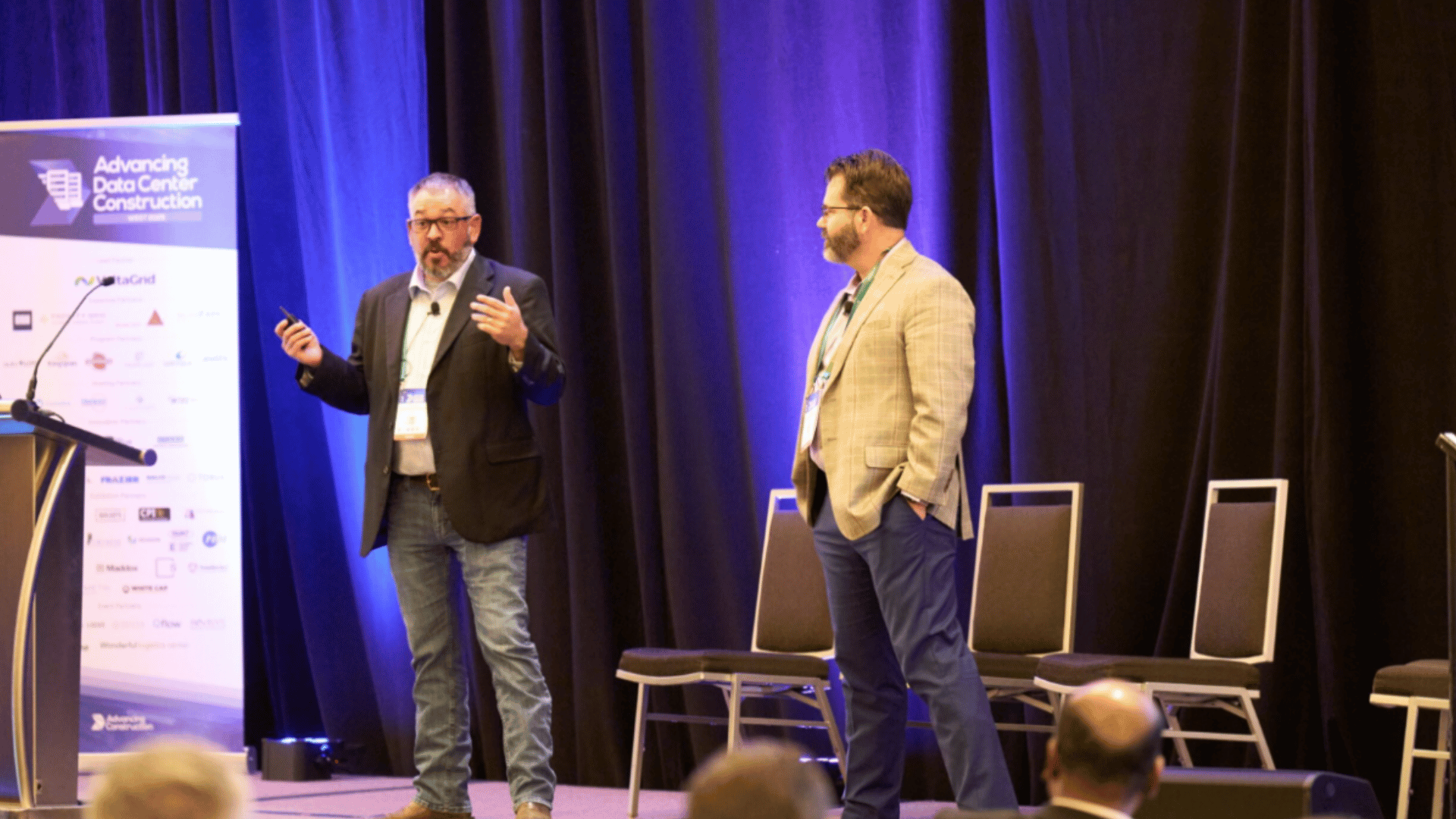
Explore the Agenda
See how leading project teams are adapting delivery strategies to keep pace with AI-driven demand, power limitations, and workforce constraints shaping data center construction across the Midwest.
Partner With Us
Position your brand at the center of Midwest data center construction and connect directly with the firms delivering the region’s largest projects.
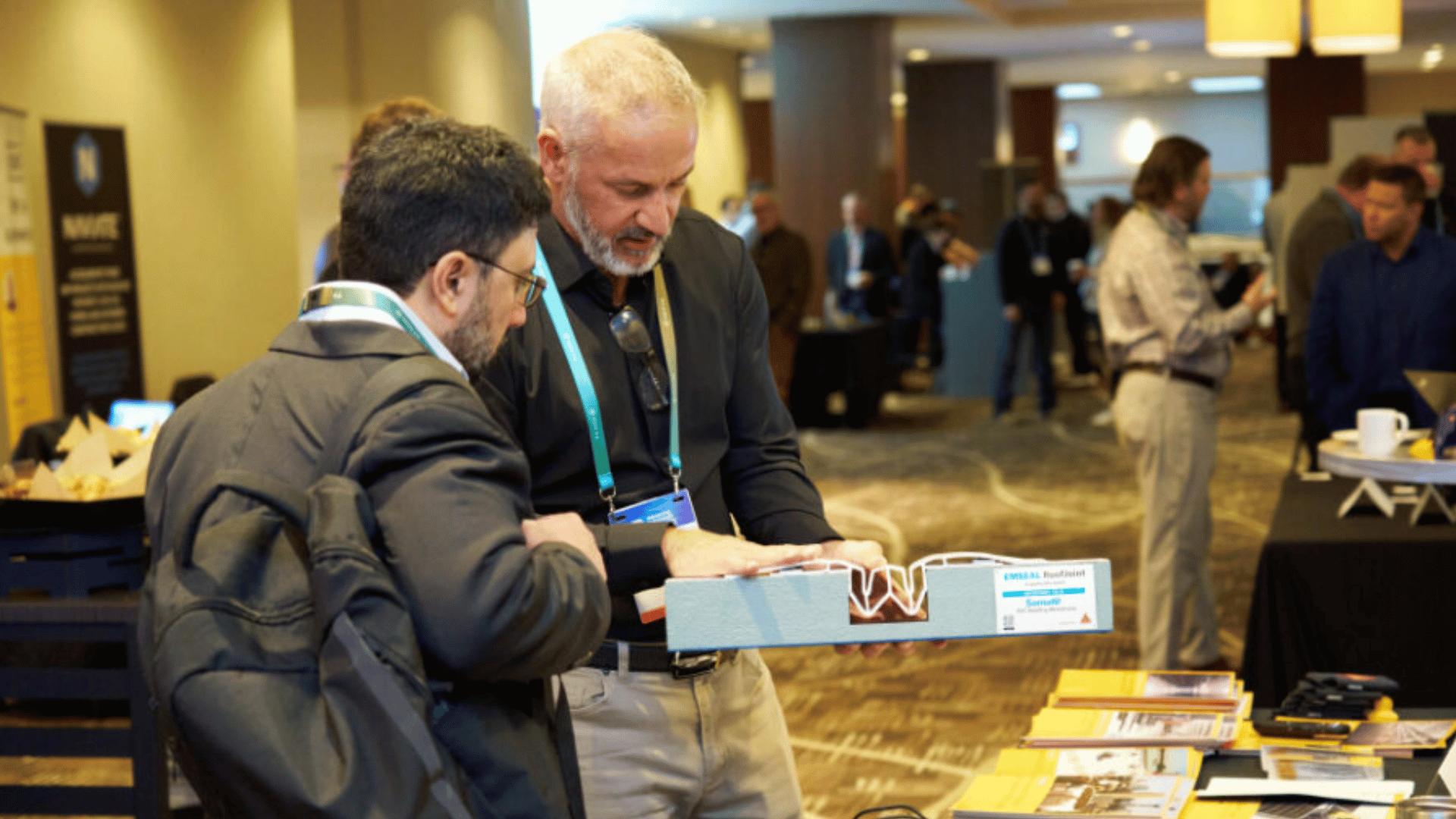
Join Industry Leaders
Build relationships with the hyperscalers, colocators, developers, contractors and trade partners shaping the next wave of AI-ready infrastructure.