
Interview with Sayeh Amirshaghaghi, Chief Water Engineer, Capital Development – City of Chicago
In this interview, Sayeh Amirshaghaghi brings a municipal infrastructure perspective to one of the Midwest’s most common misconceptions: that water abundance at a regional level ensures feasibility at the site level. She explains why availability, capacity, timing, and supporting infrastructure must all align—and why those questions are often addressed too late in the development process. Sayeh outlines what effective early engagement between municipalities, utilities, and developers actually looks like, and why coordinated planning across water, wastewater, and power is essential. Her insights reinforce the need to treat water as a strategic planning issue alongside power to enable long‑term, sustainable data center growth.

The Midwest is often seen as water-abundant. How accurate is that perception when you look at specific states and subregions, and where do developers tend to make incorrect assumptions early in planning?
The Midwest has significant water assets, but availability is highly location-specific. A common early mistake is assuming regional water abundance automatically translates into site-level supply, capacity, and infrastructure readiness. From my perspective, the key issue is whether water is available where it is needed, in the required quantity, and with the supporting infrastructure to serve long-term demand.
What does effective early engagement with municipalities actually look like when it comes to water infrastructure?
Effective early engagement means bringing municipalities, utilities, and developers together before major project assumptions are finalized. That creates an opportunity to evaluate water, wastewater, power, infrastructure timing, and long-term system impacts in a coordinated way. Early coordination leads to better planning, clearer expectations, and fewer reactive decisions later in the process.
To what extent are power efficiency gains from water-assisted cooling offset by increasing scrutiny on water use from communities and regulators?
The scrutiny is real, but it does not eliminate the value of water-assisted cooling. It means projects need stronger transparency, earlier engagement, and a clearer explanation of how water will be used and managed responsibly. In my view, efficient cooling and public accountability need to be addressed together, not treated as competing priorities.
Do you see water becoming a primary limiting factor for data center growth in certain Midwest markets over the next 5–10 years?
In many Midwest markets, power may be the more immediate constraint, but water should still be treated as a strategic planning issue. The bigger question is whether communities are evaluating water, power, and infrastructure together early enough. Long-term growth will depend on coordinated planning, not on assuming any one resource is unlimited.
What are you personally looking forward to learning from other sessions and speakers at Advancing Data Center Construction West 2026?
I’m interested in hearing how others are approaching long-term infrastructure readiness as data center growth accelerates. In particular, I would like to learn more about how developers, utilities, and municipalities are coordinating earlier and more effectively. For me, that is where the most important long-term lessons and opportunities will come from.
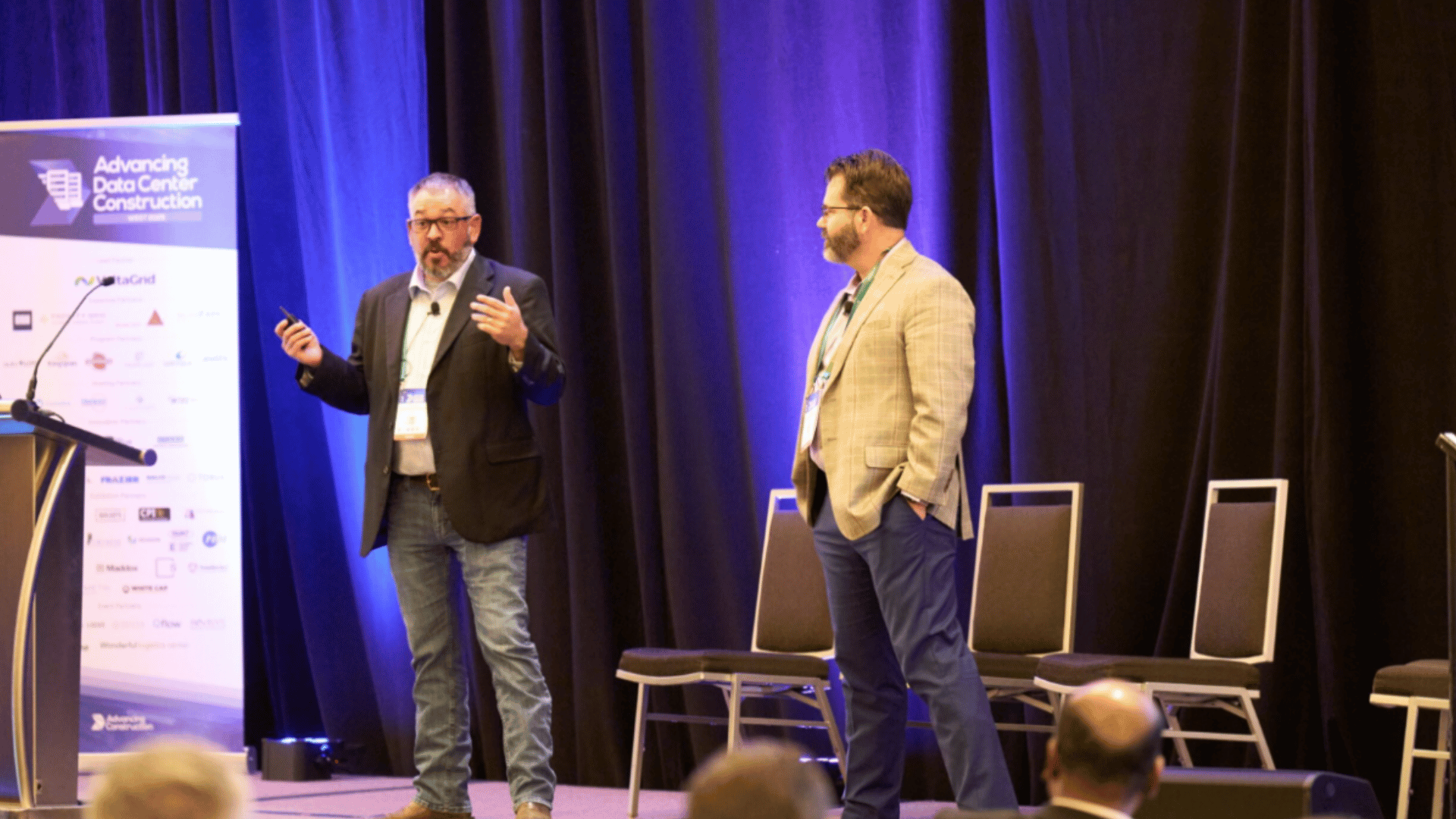
Explore the Agenda
See how leading project teams are adapting delivery strategies to keep pace with AI-driven demand, power limitations, and workforce constraints shaping data center construction across the Midwest.
Partner With Us
Position your brand at the center of Midwest data center construction and connect directly with the firms delivering the region’s largest projects.
Join Industry Leaders
Build relationships with the hyperscalers, colocators, developers, contractors and trade partners shaping the next wave of AI-ready infrastructure.